Wednesday, December 31, 2008

Funny Welcome Mesages

"Tastes and touches" Inga Iwasiów


"I did not need a support group, the best support, for a long time, I was for myself I am not alone" - says the heroine of one of the stories. But this seemingly bitter: all described by Inga Iwasiów women need to understand the physical closeness, warmth and a sense of security. And so, although it is separated by nationality, origin, financial situation and personal, much more unites them ...

Polka Among them, cleaning the marriage apartment earlier in Amsterdam and the Balkan prostitute, "borrowed" a week from a brothel by an American soldier. They are simple women going to work by train Szczecin-Berlin and spoiled lady, resting in a motel near Vienna. Is the affair his wife, a housewife escaping from everyday life in the imaginary situations and suffering from breast cancer ...

"Because the stories of women is this additional problem, that they like from the top are more heinous. That guy - he took money for bread, beat, zsikał to bed, drank methylated spirit, lying under the bridge - all can be forgiven, everything was. A woman? To which places a woman can uncover? "- Asks one of them.

attempt to answer is the whole of this extraordinary book, which consists of moving, full of strength and never sentimental psychological portraits, coupled with original observations of everyday life. Women - same with each other, with men, with other women ... The author talks about them a compact language, avoiding harsh words, but not abusing them, every sentence and surprising punch remind us that we are dealing with a great prose niemizdrzącą to readers as in the minor novels. Sometimes painful prose (though never for a moment turning to journalism) and true, because "it is not always as romantic comedy, and actually never. Once upon a time in our literature, it was not so great, unintentionally nieśmieszących and by no means vulgar sex scenes. Established for

thinking about women for women, they would have never wrote a man.

Friday, December 26, 2008

Shop Rite Job Aplacation

"Yes, darling," Melania Mazzucco


Another great review Michael.

so inconsolable

Some individuals have a unique feature of emanating power of his personality even after his death, his biography alone. Their passions alive, drowned in their behalf, and laced with it, read by successive generations, to inspire. One such form is certainly a novel by Melania Mazucco heroine, Annemarie Schwarzenbach - writes Michael Płaczek.

During his life trzydziestoczteroletniego Schwarzenbach was the object of attacks as many as and worship. Portrayed in her novels (such as "Escape to the north," Klaus Mann), poetry, and literally portrayed in numerous photographs, most important of which is a series made by Marianne Breslauer - These photographs show Annemarie Schwarzenbach in the years 1933 to 1938. The sudden, tragic accident caused the death meant that soon forgotten about it - seven years later he died, even prematurely, Klaus Mann, and the difficult situation in Europe after the horrors of carrying a second World War I certainly was not conducive to nurturing the memory of a woman who did not gain notoriety during his lifetime as a writer, just as scandalous daughter of a millionaire. Only in 1987, in the 45th years after his death, Annemarie Schwarzenbach was given back the Swiss and European culture, thanks to the interest of a young scientist, Roger Perret, who published in one of the most important Swiss newspapers, the Neue Zürcher Zeitung, "a four-page insert with Annemarie, and soon, in another journal, a long article.

niewczesnego On the wave of interest came out a lot of biographies and studies (including "L'Angle incolsolable" Nicole Mueller, author of the well-known in Poland, through his novel, "Because it is most important in love") as well as the writings of the Schwarzenbach renewals. One of these works, created from the inspiration of a "niepocieszonego angel" is also published in Poland's novel, "Yes dear" Melania Mazzucco. Fiction This biography is the only so far, apart from the old addition to the "Zadra" (greetings to Beata Kozak), available in South Africa a source of knowledge about Schwarzenbach.

I can not resist this simple reflex and did not say explicitly: it is a very good novel. In addition to the layers in the biographical text woven into the journalistic accounts of the investigation by the author to know the essence of Annemarie Schwarzenbach - a trip to her family estate, the hours spent in Cinemathique Suisse. Mazzucco made in the "Yes mistress" super surgery; described Schwarzenbach so that it could be the dry facts nabudowując passionate vision of the idol. Poetic, flowing language, attention to detail, excellent factual preparation - it all makes "Yes, sweetheart" is not folk art paper cut, ckliwym melodrama, flatter me with the paper crown, but the portrait of a woman living in a vivid, hostile world.

Annemarie was invited to the common table of European twentieth-century culture, is sitting at the next ubóstwianych friends, Klaus and Erika Mann, Her work and everything that falls into that special, so loved, "Schwarzenbach figure" can be our leading object recognition. Time to Polish audience and opened up what Annemarie Schwarzenbach wanted to present to the world. "Yes dear" is a way to do it openly.

Thursday, December 25, 2008

P Diddy White Party Invitation Paint Can 2010

"Diane Arbus. Biography"


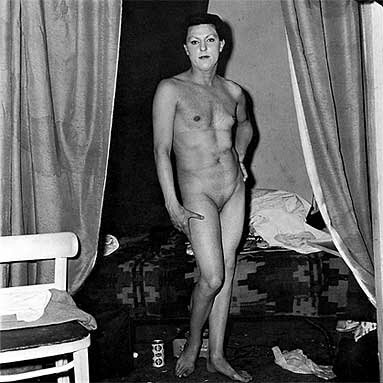
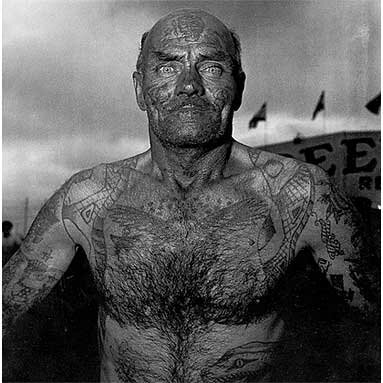
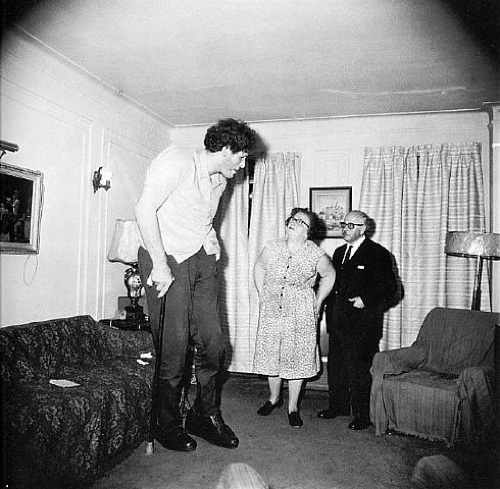
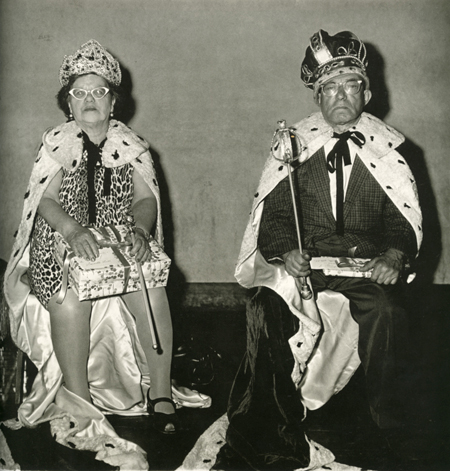
Diane Arbus changed twentieth-century photography. Her art has divided critics environment. Aroused aroused admiration and disgust. The artist has blurred the boundary between what is normal and abnormal, decent and indecent, she learned to notice what is marginal. Patricia Bosworth in his book paints a moving portrait of a remarkable woman and a great artist whose name is mentioned alongside such figures as Richard Avedon, Andy Warhol and Annie Leibowitz.

premature, suicide Diane Arbus, belonging to the greatest American photographers of the twentieth century, who died in 1971 year, has made her character and work became one of the myths of contemporary culture. Controversial, provocative ugliness and apparent severity of the pictures of dwarfs and giants, twins, transvestites, and forever changed the way of understanding the limits of normality and what is acceptable in a photograph. Although the artistic achievements of Diane Arbus was fascinated and inspired many years after her death, she remained in the shadow of mystery.

In his penetrating biography of Patricia Bosworth draws not only a portrait of the artist, but primarily women. Shows details of privacy and artistic development Arbus, following from a happy childhood in a Jewish merchant family from New York, through marriage to Allan Arbus, a partner in the artistic work, to divorce, depression and suicide.
The book also contains members devoted to how the work of Arbus is perceived today, and a review of recent publications on it.

Several photographs by Diane Arbus:


Tuesday, December 23, 2008

1980's Boombox Spare Parts

Sisters Malinowski "Grazyna Kubica


History of women do not have. Herstorie are not sticking. Women not in the textbooks, their monuments are not at all square, we have few named streets in their name. Stories about his Babkach find somewhere on the margins of history about the men - heroes. Stories of women need to unearth, find, search, play. This requires great effort. Effort, which is rarely undertaken. On the Polish market, we have enough readership of books about the history of women, especially enjoys the new, marvelous position Literary Publishing: "Sisters Malinowski, a modern woman in the early twentieth century." The author - Grazyna Kubica, anthropologist, restores to us the fate of women who appeared in the pages of the diary, "Bronislaw Malinowski. Take the effort necessary to write the history of women, the story of our grandmothers, our przodkiń, her history.

"This is the story told by women, woman, man and the title is here only a source of inspiration, rather than a general sense. I want to know these women for their own sake, I want to get into their world to know it, to taste, pomieszkać in it. I also want to find some myself, but not those instrumentalizując. I want us all retain their identity (though I know it's impossible), because I'm far enough away that I am the granddaughter of late, it's a good prospect "- Grazyna Kubica says

" Malinowski Sisters "is a created from the inspiration of Bronislaw Malinowski log women's history from the late nineteenth and early twentieth century. Sophia Benówna (Szymberska), Eugenia Bentkowska (Zielinska), Maria Czaplicka, Helena Czerwijowska (Protasewiczowa), Sophia Dembowska (Romerowa) Halina Nusbaumówna, Paul and Dora Wasserberg, Angela and Charles Zagorski, Mary Zaborowski, Mary and Sophia Zielewiczówny, Otolia Zubrzycka (Retingerowa) - writer, painter, taught - capable, well-educated - almost forgotten today. We had to reach out to archives, libraries, browse books and lists Reported students, talk to people, look in attics, in private collections and ... the cemeteries. We had an extraordinary passion for women and antropolożki that was the story of who they were, from which emanated families and matured, gained knowledge of how traveling and worked. As they left, why have forgotten about them and what gives us today, meeting with them.

Czerwińska Interview with Anna Grazyna Kubica

Anna Czerwinska: Let's start from the end. You write about women who appear in "Journal" Bronislaw Malinowski, as of their przodkiniach. In the epilogue he writes you that he feels "the granddaughter of late," these women, also refers to his own grandmother, to the memory of babkach. It's very much like us - Feminoteka. We'd prepared a special service at Grandma's Day - readers were sending us their stories about babciach. Just there to play, to extract from oblivion, for the first time to tell the story of women.

Grazyna Kubica I also have outsourced such work to my students! One of the work that had to bring to pass, was the life story of her grandmother. Very interesting are the stories and for me, and for them. Remember babciach, recreate their history. They especially like to fall in memory, in history. Grandparents argue somehow - somewhere to work, doing something. After babciach is a picture or not. Therefore, need to take care of that memory to protect this heritage.
As for the story about my grandmother, then I used it in a book of feminist and literary reasons. She was there, I need to create a continuum of female metaphors, namely the kilimu, who at the end of life my grandmother created from the remaining wool, and I She also spun the whole story.

AC: Yes. Grandma is such a "dot over and"! This indicates the importance of matrylinearność. And if you can say what is in the general sense of the history of women playing?

Grazyna Kubica First of all - women must save, create, play, recite, because they simply do not exist. Writes Jolanta Brach-Czaina: you play the female line of tradition. It is our moral obligation.

AC: Well, how did it start? Been developing your "logs" Malinowski, at which time these women have asked you out? When you decided to take care of them?

Grazyna Kubica : There were several stages. First, even during the development of the log, when I had to find some biographical information about emerging tabs on its forms, it was annoyance at the lack of information on women. About a third-rate poet, you can find plenty of information anywhere without any problem, but about women has nothing to do! They disappear. My book shows that to play women's biographies, additional effort was needed, a big effort. My search was collecting almost detective. This first stage is the development of the Official and search for information about women.

Then I lived for some time in the world "Diaries." I helped collect material for a biography of Malinowski Michealowi Youngowi. And at the time this work, it dawned on me that as I become stories of these women do not take care of, then nobody will. And that's biography is so interesting! Besides, it is also an interesting problem: what it meant to be a woman in the early twentieth century? Woman who fights for the education that he wants to do something. It is modern. There probably triggered in me a feminist imperative.

third stage, very difficult to be honest, the investigation of the literary form of this book. A very long time I did not know how to write, how to compose. I did not mean that they were only told after the other biographies. This was true for quite some casual conversation in Literature Publishing House, when the editor Malgorzata Nycz and Lucy Kowalik something in me skatalizowały structural concept. After this conversation I went home and wrote a list of contents, in principle, in such form, in what is now in the book. Each chapter is about something else - devoted to some problem, place or event.

This book has long been with me, researching, and engaging in something else, my usual duties. Working on this book was a bit of detective, very addictive. It's also an interesting way of being in the world - I travel to places where these women lived, lived, remained. Look for their traces, is also seeking another dimension to the existing seats. Important in this is that I am anthropologist, so I happened to these people in a way that treats anthropological. I wanted to learn everything about them, and thus not only about the person, but also about places, about time, people close to them, or cultural context. As I write in the introduction, there were field tests over the past.

On the other hand, was very important for me, the moral aspect of the case - or am I now that I do, or that nobody will do and this will not be. I am convinced that many of the works of my heroines, I really only read or seen. And perhaps no one will never read it and see.

AC: Was there any character that has been omitted, because you could not find information about it?

Grazyna Kubica : Yes, including Malinowski's first love - Cybulska Eve, the daughter of Napoleon Cybulski, a professor at the Jagiellonian University. I found about it only some bits of information, too little, so she could be one of the "sisters" though of course I remember about her.
Generally speaking, I wanted to write about what remains after the man, what remains after the woman. It was my methodological plan. I wanted to be treated in each chapter on each of my characters and fill in the "Questionnaire" in its entirety. Also note that nothing I could find or that have failed to respond to the question.

AC: How do you think if your heroine zrozumiałyby this job? My impression is that these women were, themselves seek such rozpłynięcia in fact, as indeed it seems to me Ms. annoyed. Is zrozumiałyby so that it is important for us today, to play them?

Grazyna Kubica do not know. It seems to me that they understand their descendants. Daughter Otylii Retingerowej - Wanda Puchalska and Andrew Romer, a descendant of Sophia Romerowa who read passages about their mothers. Much they liked the book. Andrew Romer even stated that I am writing too well. But this may be due to the fact that he has, however, male perspective, and I look completely different to this woman. I'm interested in some problems, for which he would have probably paid no attention.

It seems to me that contemporary feminist perspective is quite different than the then. Maybe my character would have something against me, but on the other hand, seems to me that we would dogadały, agreed.

AC: Because I am curious, how much they wanted to live in this woman's world. In this world dominated by the Stas and weapons (Witkiewicz and Malinowski)?

Grazyna Kubica : And Conrad.

AC: Exactly. To what extent were they able to see this place. My impression is that these girls are not exactly know what to, do with your life. Only Czaplicka here is a place he struggled.

Grazyna Kubica : Yes, and fell in this fight.

AC: A sister Nusbaumówny knew a nut, but this did not translate to the emancipatory activity, for example.

Grazyna Kubica : The sisters Nusbaumównymi in general was an interesting case. Their father - Professor Henry Nusbaum was a man of an open, progressive, for example, deal with the assimilation Jews. But the roles women have traditionally seen, and forbade their daughters to study. Only this "university" Orzeszkowa come into the game, ie being under the care of property.
Returning to the question, then the women in the public sphere, in the early twentieth century, there was a different situation than we are. They were very clearly visible.

it once I recognized the hat metaphor Kiedroniowej. Sophia Kirkor-Kiedroniowa of Grabskie (sister later minister), lived in Karvina Basin, moreover, right next to my grandfather, Joseph Kubica. It was a very active activist in the wake of Polishness Silesia, she was a member too, just after the war, in the National Council of Cieszyn Silesia. I remember a photo where they sit wyfraczeni, or rather wysurduczeni men and is the one, the only Kiedroniowa in the hat! This hat is so terribly visible!

These women were very visible in this male world.
One could not escape the problem of femininity. They had to think about what it means to be a woman. For example, Maria Czaplicka dealing with this in his poetry and letters. She had to be defined: Is this my femininity I somehow limited or not limited, what to do with it, or you had better restrain or not? Well, that's her problem androgyniczności as a monstrous creature that has a male and female mind, body, and must somehow live with that. Then the Cartesian division between mind and body work so that it was necessary to limit the body, because right is on the side of reason. It had to deny femininity. Especially when you work in science.

AC: It was the same nut. Once gained recognition, it would head off "a bit masculine."

Grazyna Kubica : Exactly. The problem being a woman was then very important. Everything had to change, so we we existed in the public space and become invisible. Now, do not pay attention if women in the room, to which we enter. This of course works the other way: we do not see it that sometimes women do not have, or that there are not enough, for example, in the Diet. is a discussion on television, sitting a few men in suits and there is no woman. This is true even of so-called programs. cultural.

We already do not have this hat on their heads Kiedroniowej. Ie. entering into the public space, we do not feel so terribly visible and alone. But we often do not have, spreads out and no one sees.

AC: Well, because what we now mean? After all, we all have!
not remember not only the rights of women, but also does not remember about these so that we have them. Even for men. The book shows you that the men joined in the struggle for women's rights. Reminds you figure Bujwida.


Grazyna Kubica : In Krakow Bujwida figure is unknown, as well as his wife.

AC: I like most about Bujwidowej this anecdote, which puts Aneta Górnicka-Boratyńska in "Four portraits of emancipation", when she stood for election, even if women do not have the right to vote! Why do these women are lost in history? Why do historians do not pay attention to women? Do not deal with the history of women?

Grazyna Kubica : This is not a simple matter, there are several reasons. My book is the disagreement on such a course of things. First of all, the story deals with the most odkrywczymi scholars, the most innovative authors. Women, to get recognition today, but rather had to be konformistkami and customize to existing patterns of conduct, the rules in force in society, or in a specific area in which worked. Consequently, he rarely allow yourself to be innovative, to make a breakthrough, because it is threatened by marginalization, exclusion and offset outside the discourse. It seems to me the fundamental problem. Creativity of women had to bend the rules of the present, to ever be recognized. Sophia Romerowa is a good example. She's really a lot of painting, her life was very fertile creatively, but only at its end writes in his diary: "I have a wild desire to paint - paint differently than before, gaining a full brush of paint, putting it on canvas and thick lines, combining it with your finger." This is extremely significant that she discovered at the end of life, and so most would like to deal with what would have made her the most joy. She never did! It was a portrait painter, so she could not afford to madness, had to reckon with the tastes of customers.

AC: Because girls can not "wallow" in paint. The girls are polite and do not get dirty.

Grazyna Kubica : Well, yes. A similar procedure can be used in relation to Czaplicki and anthropology. It was innovative Malinowski, looking from our perspective. But then it was Czaplicka better position in the academic world, the quotations were higher, but it was more traditional anthropology. Although it is not known what she has had not committed suicide at the age of 37 years.

AC: Men in this book have a huge sense of his genius. This, of course eminent men (Witkacy, Malinowski, Conrad), but I mean the building of their own their image: they had a sense of his genius

Grazyna Kubica : Yes, his mission.

AC: And those women that do not have! As if it was inconceivable that they may be brilliant, that they can create something special (this feeling has only Czaplicka). So they bask in the glow of these men, having a feeling that most of what they can do is give dumplings Conrad ... (Otolia Retingerowa notes in his memoirs that when he first invited Conrad to the house, it gave him dumplings).

Grazyna Kubica : (laughs) But it's very good that she wrote about those dumplings! I regret that in the book that some of these women, and especially for Otolii Zagórskich Retingerowej and sisters, had so little confidence in their own creative possibilities and the only thing the self produced, it is of great memories of Conrad.

Style Retingerowej is extremely sensualistyczny. We feel this world, in which she lived. This England, the wet asphalt alleys, these dumplings are simply feel this writing. The memories Zagorska are very emotional. Angela was such a detector, emotionally, it's all depriving the nerves and so it is told. Her sister, Charles had a metaphorical style - something told me, referring to another reality. So maybe if they give them a chance, if they support this ...?

Although they did such attempts. Wierzynski for example, commissioned Karoli memories and then tried to mobilize them to continue writing. Unfortunately, to no avail.

AC: Maybe genius of these men strongly deprymowała them?

Grazyna Kubica Yes. It was also such a belief that how one writes something, it must be brilliant. As it is not brilliant, it's not worth doing anything. Maybe even genderowy aspect of the case was not an important one. Although the course work for women is much more depressing than the men.

AC: Is it me, or you with a certain indulgence writes about Witkacy and Malinowski, even through that, you write: Stasio, Bronnie, "and if he thought poor Bronnie ..."? Is it revenge for how they treat women?

Grazyna Kubica : A little, yes, but above all I was trying not to be on their knees. Peeled off the prospect of these women. It was their friend, lover, friend from childhood. And they, if they were on their knees, what were the most erotic knees.

But then I wrote more "Stas and Bronnie" than they do, because I realized I'm looking from a distance and time, and cultural heritage, which they often exert a negative impact on these women. Tragic toll. According to me, no work does not justify a negative impact on another human being. So I appreciate very badly that she committed suicide Jaczewska Jadwiga Helena Czerwijowska was this very closely, and Zosia Dembowska "survivor" only thanks to the parents that fled to Vilna, which is far enough away to his vampirism Witkacy not touched ... Although the book, I try not to make any judgments.

also tried to show the misogyny Witkiewicz. Show the finger: here it is. The "662 Bunga downs" for example. It is important to note that the icon of the avant-garde of contemporary Polish culture - Witkacy, he was a misogynist, do not be afraid of this word! Irritates me how to show women in "622 Bunga downs." Even more difficult to look at it differently when they come to know Originals, those women who used to this, he used. It makes me opposed.

AC: That's for me to understand. I read your book, I was always on the side of the heroines. Yes, it is difficult in principle to part with them. Sometimes they are annoying, but really feels very sympathetic to them. I say this as a reader, and whether you as a writer, it was difficult to say goodbye with the heroines?

Grazyna Kubica : I am with them I said goodbye! I still have some plans. Even after finishing the book, it turned out the prof. Paul Banas Wroclaw published a book about the postcard, where he used a lot of cards to Karoli Zagorska! And there is plenty of information about her! So I'm going to Wroclaw. And so it is in several other cases.

AC: Which of these women was most fascinated you? Czaplicka? You wrote a few articles about it and did an exhibition at the Ethnographic Museum ....

Grazyna Kubica : Czaplicka is familiar to me, if only because I'm anthropologist as she. In the Polish anthropology was completely forgotten figure. I wanted to do something about it. Przeryłam almost all archives in Poland and England, but even going to the United States. It's also such a burial in the history of their own discipline. Besides Czaplicka is somehow a reference point, the gender dimension is added to my interest in biography and work of Malinowski. She also wrote a really great deal, and her writings are very varied. Not only left a dry ethnographic articles, but the poems, letters, novels for young people - this is the treasure trove of great material, a reason to take its guises. Through it all, was the closest to me also, but all the heroines have been interesting for me.

AC: I actually asked at the end - the tip. You apply the book very hard to female end - the names of occupations, including in relation to each other. Was not there problems with the publishing house?

Grazyna Kubica : Forest Books is a great annexe. But the guerrilla struggle run with him since "Diary" Malinowski. It seems to me that I succeed, or put it like this: we have a mutual respect for each other (laughs) I'm hard, when it comes to female ends. It sounds bad? How to start using it starts to sound good.

AC: Female terminals were often quite widely used precisely in this era, which you describe. There were no problems to write: a writer, hetmanka, a member ...

Grazyna Kubica : Even though sometimes redundant, for example, 'woman doctor', 'doctor' would have sufficed, but it was also underlined. Then it was ukobiecenie names and everything. For them, it was obvious, and we must back put it with considerable resistance. I try to fight it, and sensitize it to its students. If more people start to use the female end, it will cease to surprise us. Ceases to be disagreeable. In my book I wanted to refer to the "readers" at least sometimes. That just was not able to win, but I wanted this.

AC: The more the readers will be whether there will be some readers, how do you think? Because the treatment you would be completely understandable to me: a book about women written by women for women.

Grazyna Kubica : My son (age 14.5) read a passage from the book properly appreciated. So maybe someday read it to the end. seems to me that men can be just as interesting to play women's line of tradition, as well as for women. This may be a problem for patriarchal men, because they do not recognize the meaningfulness of this project. Well, they cross the road.

I remember after the show dedicated to Czaplicki, which I did in the Ethnographic Museum in Krakow, I was invited in the framework of the Polish Sociological Association in my Institute to give a presentation on it. After five minutes of my speech, one of my colleagues stood up and asked: but why we actually have to listen to? What she has done this that we have to sit here and listen to her? I am a bit skonfundowałam, but I answered him: 'Cause you know, Curzon Press published her Collected Works in four volumes. And he said: Oh, I understand. It satisfied the demands it! If it all works were published by prestigious publishing house Curzon Press, it is the reason why he can sit and listen to her presentation.

Well, yes it is with these women.

Monday, December 22, 2008

Pain In Legs On A Three Year Old

Tale Cache "Margaret Atwood Courtyard


Atwood settle the action in a totalitarian, theocratic state which lies at the present United States, and ironically named Gilead - from the biblical land known for its soothing balm. The regime of Gilead, posiłkując draconian legislation and the extensive apparatus of repression, brought women to the role reproduktorek, the title "pop" in an attempt to solve the problem of low birth. Closed them in special camps, deprived of their names, numbers were tattooed on the forearms. They were not allowed to read or write. Counted in so far as they can have a baby. The body could not arouse desire, and sex - to bring pleasure. The conception was an act entirely mechanical, otherwise, moreover, could not have been, since according to the current doctrine of the appealing interpretation of biblical texts the woman was only a vessel for the male sperm.

futuristic novel, Atwood has a specific historical roots. Was created under President Ronald Reagan, when the American right wing tried to stop the process of emancipation of women. His strength began to show representatives of the "moral majority", the opponents of the constitutional amendment on gender equality and activists from the trade antyaborcyjni pro-life, including the instigators of terrorist acts against abortion clinics. At the same time the world learned about the ban on all forms of birth control and forced pregnancy tests made by the Romanian dictator Ceausescu and the incapacitation of women in the newly established Iranian theocracy. "The Handmaid's Tale," grew out of concerns that this crazy marriage of the totalitarian ideology of religious fundamentalism, which, in America, alluded directly to the Puritan heritage, may shape the future communities.

Atwood has used a well-known to the wretched of the twentieth century genre called antyutopią. The creators of this type of literature, from Huxley to Orwell warned against utopian ideologies that proclaim your password transform the world and human happiness for the price - supposedly temporary - the suspension of his rights. Original sin of utopian thinking was that human nature in all its complexity through indefinable and marked by contradictions, you can - thanks to science or revelation - reduced to one formula. For those who in this formula does not fit, there was no place in the utopian paradise. So if the essence of femininity was the issue of offspring, women unable to procreate considered "niekobiety" and were sent to penal colonies. The man, whose sense of existence is reduced to one function, turns into a machine who does not feel right or anything, or think about anything. It has only been fully operational.

But Atwood book, cruel and frightening, is not fictionalized journalism - it's well written story of the inseparable link between identity and corporeality, feelings of hunger and the need for intimacy. Atwood weaves high Class lyricism of futurology, a predatory political satire with a sophisticated psychological study.

Sunday, December 21, 2008

Trading Alcohol For Librium Addiction

Goddess. Around the "Girls of the Portofino"


O "Bring the Portofino," writes Michael Grazyna Plebanek Płaczek. Its a great review encouraged me to read this book.

Often disturbs me the pleasure of reading the annoying feeling zblazowania. How can I be moved by seeing the world through the prism of film so overexposed that neuter, what do I find out about yourself and the world, where the author offers me a set of truths about life that is life is guided by perhaps only by the characters "M is for love." Hence my aversion to a novel described as moral, is the use of the reading usually was that I learned that we are not getting younger, and the plot does not pay, I really love you once and only one person of the opposite sex, and so ad nauseam, in the conventions of folk wisdom.

Sometimes, life's throwing the next message in the corner of consolation imagined that somewhere out there sprouting, and maybe even longer waits for me, released and finished the story so real that amuse me and shrug, will be shown wisdom, not a cliche with second-head'u. And received.

"Girls of the Portofino" is this novel, I had been waiting. It was worth many times fail to finally discover novel woven with the "life and emotional concreteness," as determined by Agnieszka Graff. Grazyna Plebanek with considerable and quite surprising, because I understood completely custom, epic drew me look very familiar herstorie four girls from one yard. The narration guided by the beater to adulthood apparently located the conventions of popular women's literature. But this is only a convention - a novel Plebanek be very much to the literature of high, tackles the problems it was reserved for, while still rejecting teoretyczność for woolfiańsko-Brach-czainowskiego existential concreteness.

Tales initiation

Initiation is one of the most important problems of women's literature. Analyzing the loudest (in this and often the best) works of Polish literature about women's signature writing is easy to see that, de facto, most of them are stories of initiation into femininity, of knowledge and experience (related). "Absolute Amnesia," "Alma" or somewhat "Book 'Em" Izabela Filipiak stories are initializing. Similarly, early (and interesting at the same time) Manuela Gretkowska novels - "My zdies' emigranty", "Tarot of Paris", "Cabaret metaphysical" and "Guide to the people" - including record of women empowerment, transgression on the part of women spatriarchalizowanej, appropriated by the system to the other , mysterious, feminine side boginiczną wisdom, strength and knowledge. The transformation of patriarchal women in post-matriarchal, enlightenment arising from women's awareness of the limits of existence and strength of women's relationships - the images disturbing, I found far beyond fallotekstem culture.

girls pass the title classic, patriarchal social training, which resulted is not, as in "Amatorkach" Jelinek loss - conformity or social degradation, but the sense of power. This is a precedent in Polish literature, however, still the modus operandi of members of groups dziewczyńskich was an illustration of folk truth "woman wolf woman." World Mani, Hanka, and Beata Agnieszka not turn around the boys, their dilemmas far beyond the classic question, "Did he call?". Boys, boys, men - they all appear to be often disappointing, it does not come from them strength. This world is upside down, a world in which men are unknown and strange, sometimes even grotesque with its system of values \u200b\u200band obsessions and obsesyjkami. However, I would be well understood: it is not in any way antymęski pamphlet. Men just can exist here or not, it's not about them was at stake. It's about women, their lives, emotions and body.

And the body appears in many places, companions, and also initiates. In particular, two images have a special place, a privileged: first menstruation and abortion. Both of these experiences, described the woman's perspective are oddemonizowane asset and acquire wisdom. Particularly record (s) raised interest in an abortion because they are written as if it never existed prolajfu language, straight from the trauma of abortion "Silent scream".

Agnes took off her skirt, stockings, panties. Entered into an armchair, put his feet with metal handles. Just watch, not to oppress. (...) She did not notice when he fell asleep, and then someone saying on it: "Agnieszka, wake up, Agnieszka ..." She opened her eyes. A bit of circling her in the head.

(...) - I think so or not I feel sorry for this child ...
- Child? The child is just as it begins to make love. And before that is just silly talk of those who do not know. Agnes
closed her eyes. Voices blended soothing, filled with peace, usypiały. She lay there, getting heavier, more and more useless. Anaesthesia still worked, dizziness subsided. So, after all. That's what this woman said - that a child must love - was true. If it were otherwise It would not here, this immense feeling of relief.


is also the case with the image of childbirth (birth Mani is a natural wonder by Agnieszka uchroniony the medicalization and appropriated by men władzowiedzy, doctors), motherhood is a conscious choice, and the image of nursing her newborn Mani's daughter recalls the images of the existing matriarchal Goddess for myself, filling up their own primary, life-giving and untamed strength.


Women's Talk and moments of existence

Ple ple, or the beach the beach, gossip, sex (no rhyme or reason) - all traditionally associated with women's ways of verbal expression. - Kazia Szczuka writes in an essay dedicated to women's work and a focused around her metaphors. Special and important place here is entitled fantazmatowi weaving, braiding, from which already pretty close to just weaving. Szczuka figure mentioned by the "Spinners banal reality 'is essentially the figure of a woman writer's archetypalna, weaving their story. Such writing, to create a variety of recording the existence of particles, despised acts, and the use of "gossip narratives" marks the text of the signature women's writing. The body, speech and overall experience of the entity are in the prose of a woman in an integrated and structured text. That's what male critics (vide Swietochowski) saw in the nineteenth century as shameful for literature, reprehensible is the fact that raising to the rank text from the realm of nature despised and inferior. Meanwhile, according to the definition proposed by Maggie Humm gossiping is a method by which women get to know each other's lives, (...) Strengthen ties between themselves and contribute to the formation of a collective consciousness within the local community . Gossip is a way of women's communication, knowledge of movement closely linked to the realm of empiricism. So, if the sphere of "legal" domesticated woman and domestic activity is burdened worseness patriarchy - it is not surprising that the way to describe this area, belonging the verbal expression and accrued on the basis of women's bonds also are considered inferior and not serious.

moments of existence. Occur less frequently than the moments non-existence, as noted in the manual Izabela Filipiak, "Creative writing for young girls", they require patience, their meaning often manifests itself years later, only when we Gather quite a lot of moments of existence, so connections between them have become all too evident . term "moment of existence" comes from Virginia Woolf, in which each piece is actually woven (exactly - woven ) of single, scattered impressions. Memories, and sometimes only their shadows, catching the sunlight through the window and showing curtain wall design, irrational sense of joy in the morning weather - who has read (a) even though "Mrs. Dalloway" know what I mean. Moments of being, moments of slipping and easy to forget, sometimes becoming before us nowhere. What is so easy to miss Jolanta Brach-Czaina teaches us to live consciously offering his philosophy outlined in the existence of "gaps ..." and "the membranes of mind."

narrative "Girls of the Portofino 'is a knot dziewczyńskich and women's stories passed from mouth to mouth, sometimes taking common form of giggling, sometimes intergenerational wisdom, as was the case in the quoted passage, where an elderly woman teaches younger survive abortion, unwittingly (?) reveals her sense of the experience of gaining control over herself, over his own body and destiny. Gossip, underground money into the underground world of diapers, cooking and cleaning, but also the vital forces that manifest sexual potency, menstruation, birthing, and controlling their own fertility, as in this scene:

- What is it? - Asked Jim.
- Condom.
- Do not you trust me?
Leaving the pack.
- I do not trust you - she whispered, thrusting his chest. - Too much turn me ...(...)


So there (as well as in the description of first sex Hanka) female figure originator irigariańskiej Aphrodite, the goddess of love, loving, harmoniously combining physical and spiritual guides will love this, which allows both sexes to find each other, create their own identity. All paths lead us toward wisdom and power.

Eleusis and matkofobia

Chain, or rather spider's web of female relationships have their beginnings in the center and one common to the point, what is the relationship with her mother. In the classic essay, "Born of a Woman" Adrienne Rich has devoted motherhood and córkostwu one of the most beautiful but also most difficult chapters, showing how far the complicated and intertwined relationships are.

In "Bring ..." we have a whole set of different configuration of Maternal - córczanych, of which I would like to draw attention to two that seem to me to be the most interesting. Agnieszka and Hank there by their mothers to the extent so far that they are permanently connected to the common nodes of symbolic orders.

"Matkofobia" is a term coined by Lynn Sukenick and described in some detail in the book mentioned already lots Rich. It is not enough, as Rich says, the fear of my own mother or motherhood, but before becoming own mother. This phenomenon is well described by Erica Jong, however, did not use the term matkofobii and only describe its mechanism, explaining the voluntary conservatism daughters of the tribe living the era of second wave feminism. Adrienne Rich writes that women with a mess in the house (niezaścielone beds, dirty dishes) are the most pedantek daughters. This is a good example, because the level of metaphor that explains the whole attitude. House as a place of feminine activity, if the condition is conformism (consent to oppressive normativity), immersed in a mess is a symbolic rejection of married and maternity enslavement to anarchy, understood by the environment as a breakdown of female identity.

Hanka's mother is no small group of women were beaten and humiliated by his husband and prejudicial to his fate. Denounced by her statement at the end of a book about being "decent woman" demonstrates najjaskrawiej is what it is that Hank ran away. Respectable woman is a "happy slave", the one who accepts his condition and creates a "military arm of patriarchy" (we know how many such women in novels and plays of Elfriede Jelinek, from "amateur" from!). Hank has repeatedly urged her mother to try to change his position, how many years you can hide the circles under a handkerchief? Gradually gained awareness of the impossibility Hanka changes must lead to the choice: either to become what it is her mother (and the state on the system) becoming a wife or any other country Józka fatyganta what it will feed and shelter can, and that sometimes has been instrumental in what he one? If only he was resourceful!, Or escape from this fate. Living with parents under one roof, Hank could not free himself, so abandon the aid of dental work and travels to Germany to the Berlin motel dabble in prostitution. But the narrator does not leave it in the motel room, hugged her cheek to the wall as well as they once did in the nursery, where his father maltretował mother. Despite all this tragedy should be noted that the gesture is more an act of Hanka desperation than autoimmunity and ultimately has the value of free choice. The thread of connection is broken farewell letter: Dear parents! I went to a brothel. Forever yours - Hank. I will never be recovered, which is the largest dimension of the wound on the female identity, the heroine - as Adrienne Rich says, the loss of her daughter by the mother and the mother of a daughter is the primary female tragedy.

This loss combined matkofobiczną tragedy with tragedy Sarah Hanka, which her mother never knew and believed that she died shortly after the birth of his only daughter. The truth is that Sarah's mother fled from her father, unable to endure the terror of being forced Hestia. To know the other girls, and it is through this knowledge to perceive (and we with them), his girlfriend. Agnes lives absence of his mother, after her grief, grief that must be completed - without that Agnes would never exceed themselves and fail to make the initiation. Symbolic connection with the mother is outside the world of the novel, the intertwined narratives Beaty, Sarah's voice played from the tape and the narrator additions outside the United States (fantazmatycznego place, a better "out there" in the U.S. or anywhere ). Eleusinian ritual is so beyond the sight of death, just as Homer wrote of it.

small backyard true

Social Transformation, the fall of the Berlin Wall, the victory of Solidarity, opposition stories in this novel are the background. United truth is relegated to second place by a small truth, private narratives. As if the world was built around a courtyard, beater, park. Prefigured images of transgression is a heap, which are having a secret a girl. This act is preceded by a fairly long period of fantasizing about this trip, filled with telling images and the fascination with the knowledge to confront the threat that pervert is a phantasm, a lonely man pokrzykującego toward girls. Joint expedition, a description will inevitably recalls the Sabbath, anarchic celebration of sisterhood, anticipates lonely (criminal) Hanka's escapade, escapade that would forever remain in my memory as a secret. Sharing the secret, hiding from the world of his work (digging in the sand slides) is archetypalną girl 'attitude described in many places (even the immortals "of the Children of Noisy Village").

little truth's own life, intimate truth given by word of mouth is the thread from which the narrator - Klote (strangely reminiscent ridiculed "her aunt klotkę") - draws on the work of our eyes with a unique value. Apparently nothing unusual - just ordinary laughter and the girls stories, old wives' gender. And yet much truer than suggested by some writers of great national narratives. If this is a novel about the yard, this yard is a resident of the Goddess.

Saturday, December 20, 2008

Can You Get Drunk From Scope

body does not own. O "Amatorkach" Elfriede Jelinek


"Amateur" is a relatively early, because the coming of the 1975 novel by Elfriede Jelinek, have already seen it, however, the characteristics of a future Nobel Prize winner champions workshop: focus, precision and mocking sense of humor, and by the style - avant-garde literary form, which involves the presentation of thoughts and feelings of the characters in exactly the same way as external events. In this way, Jelinek effectively debunks the illusion of individualism and can somehow catch red-handed operation of the mechanisms of ideological which are not the product of this or that particular mind, but they operate in the space between people, setting and characters of roles within the programmed ideology structures.

"Amateur" is a story about the fate of two young women: Brigitte and peasant seamstress Pauli. Their life is no different from the stereotypical pattern, but the interest Jelinek become cultural cliches relationship between behavior and the social practices of power. Not having any property, Brigitte and Paul can count only on their own bodies and use them to try to fight for your life and social position. It is worth noting that, in the strictest sense of the word "proletariat", refers to people convicted solely on the level of production and reproduction of the body. The fight takes place on two levels: first, the need to secure the biological survival of working for others (whether the work will be paid or not), and secondly to get the highest price in the "market women", which turns out to be the most important physical attractiveness . Since the latter generally depends on the first, so it is important to outshine other women and become the chosen commodity, for which the male consumer will be able to pay a lot.

Both heroines "amateur" are available to only their own bodies. Both argue that the bodies are not in the slightest their property and may decide - on a limited scale - only about who will be their master and owner. The alternative is "bezpańskość", meaning is often pushed out beyond the interpersonal world, which can not be that bad, if not the fact that it does not protect you from having severe work for biological self-preservation or the forced submission colloquial terms of stereotypes. The only chance for the likes proletariuszek Paula and Brigitte would be quite a different order, and its foundation - the end of rywalizacyjnej hatred between persons sentenced in the struggle for existence only to their female bodies.

Will It Hurt To Use Nystatin If Its Expired?

"Woman to eat," Margaret Atwood


woman to eat, the book-to-swallow. Margaret Atwood's novel draws. Exactly when the time expires and subsequent pages of the story. There are no dates, no political events which umiejscowiły to us in time. Equally well, they can be the 60th year in Canada, in 2008 in Poland - the late, economically, culturally and mentally in relation to the west.

heroine, Marian, is faced with a choice between the rock - Peter, earning good lawyer, a dark and mysterious Duncan, that is, freedom, independence, being an individual but also a consumer.
symbol of the heroine's disappearance will be a progressive anorexia, including an increasing number of products. It begins with a bloody steak, through the egg until the carrots. Marian realizes the suffering of animals and plants, enslavement and taking lives. The culmination of the transformation is induced by starvation and alcohol screening of the future, which has experienced at a party at her fiance. At the party, which at the last minute invited their friends, has a queer dress, hairstyle, jewelry, and face. Liberation gives her escape from her fiance and his world and to prepare sponge cake - sweet, empty women, women to absorb. Prepare cake and eat it from the leg returns Marian freedom and appetite. And the narration, since the middle of the book is told in the third person to come back again at the end of the first-person.

Despite the passage of 50 years, the topic of "Women to eat" is still valid. Cautions against too much resignation of herself to a close and the expectations of the environment. Tells you how close it is to compromise and sacrifice, of falling into dependency and self destruction and even falling into madness.